Hiring a Framer Developer in Sydney

By All, Insights
Whitetower Digital is an official Framer Agency Partner based in Surry Hills, Sydney. Founded in 2014, we design, build and optimise Framer websites for startups, SaaS companies and established brands across Australia. Our team delivers strategy, UX/UI, development and conversion optimisation from Sydney, with build capacity in Manila and support in New York. If you need a Framer website built by an agency rather than a solo freelancer, this page explains what we deliver, what it costs, and how the engagement works. What a Framer developer actually does A Framer developer builds production websites on the Framer platform. That covers component architecture, CMS structure, animations and interactions, responsive layouts, custom code where needed, and technical SEO setup including schema markup and analytics. The difference between a template customiser and a genuine Framer developer shows up in three places: page speed under load, CMS structures your team can edit without breaking things, and interactions that improve conversion rather than decorate the page. Agency or freelancer: which should you hire? Hire a freelancer when you need a single landing page, have a tight budget, and can manage the project yourself. Hire an agency when any of the following apply: The site is…
Read More

How much does it cost to build and deploy an AI agent in Australia?

By Business, Insights, Tips & Guides
In Australia in 2026, a production AI agent typically costs between $15,000 and $80,000 to build, plus a monthly operations cost of $1,500 to $6,000. A structured readiness assessment beforehand usually runs $5,000 to $15,000 fixed price. The wide range exists because the agent itself is rarely the expensive part. Integration with your systems is. This guide breaks down where the money goes, what changes the price, and how to avoid the two most common budget mistakes. The three cost layers of an AI agent 1. Readiness and scoping: $5,000 to $15,000 Before building anything, you need to know whether your data, systems and processes can support an agent. A fixed-price assessment covers data audit, use case prioritisation, security requirements and a deployment roadmap. Skipping this stage is the single biggest cause of blown budgets, because problems discovered mid-build cost five to ten times more to fix. 2. Build and deployment: $15,000 to $80,000 per use case The build cost is driven by four factors: Integration complexity. An agent reading from one clean knowledge base sits at the low end. An agent writing to a legacy ERP with poor documentation sits at the high end. Risk profile. Customer-facing agents handling…
Read More

Digital Transformation was stage one. Forward Deployment Engineering is the rest of the job.

By Digital Innovation, Insights
When we started Whitetower back in 2014, clients came to us for websites. A few years later the brief changed and everyone wanted "digital transformation." Get the business online, put in a proper CRM, wire up some dashboards, get off the spreadsheets. It was good work and it was necessary work. But looking back, most of it was really one thing - getting digital. Getting the house in order. That was stage one. And a lot of businesses are still sitting in it. The label has since moved on. The work that used to get sold as digital transformation is increasingly being called Forward Deployment Engineering, and the rename actually means something. The model Palantir built over a decade ago - put an engineer inside the customer's environment, give them full ownership of the outcome, let them build in the real stack and keep iterating after launch - has gone mainstream. In the last 18 months OpenAI, Anthropic, Databricks and a long tail of AI companies have all stood up forward-deployed teams (OpenAI even spun theirs into a named "deployment" group). Job postings for the role grew somewhere north of 700% year on year. It's no longer a niche title.…
Read More

WordPress 7 just changed what AX actually means

By All, Digital Innovation, Digital Marketing, Insights
This Wednesday, WordPress 7.0 ships on 20 May 2026. It's the biggest release in years. And it does something most people are sleeping on. WordPress It puts AI inside the platform itself. Not as a chatbot. Not as a content generator plugin. As infrastructure. What's actually shipping Three things, working together: A new Settings → Connectors screen where you plug in API keys for Claude, ChatGPT or Gemini once, site-wide The WP AI Client, a shared layer every plugin can use so they're not all reinventing their own AI integration The Abilities API, which lets your site declare what it can do in a way AI agents can read There's also an official MCP adapter so external AI agents like Claude or ChatGPT can connect straight to your site, see what it can do, and take action. Gutenberg Times That last bit is the one to pay attention to. Why AX is now different For the last 18 months, AX has been about being read. Schema markup. LLM.txt. Clean entity data. Structured content. All so AI could find you, parse you, cite you when someone asked it a question. That was AX 1.0. Passive. Read-only. WordPress 7 flips it. Now…
Read More

Universal Commerce Protocol (UCP), the e-Commerce solution to AI Experience (AX).

By Digital Innovation, Digital Marketing, Insights
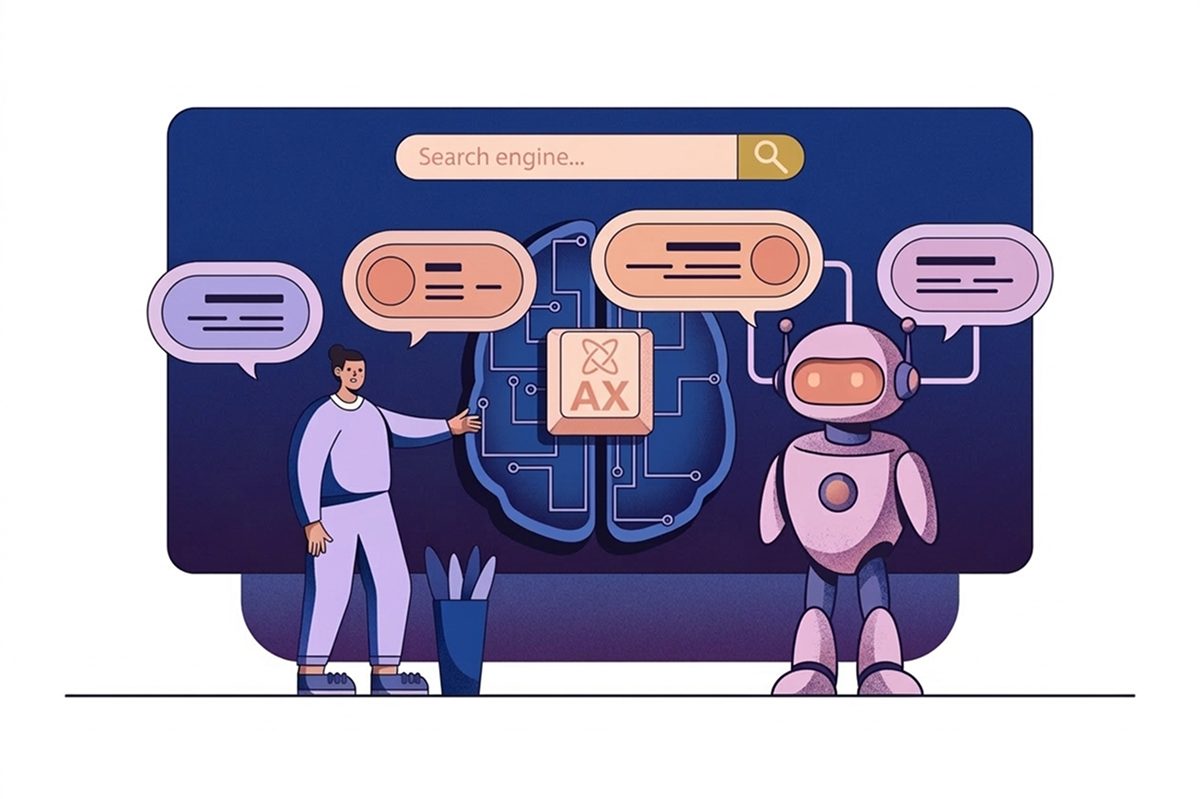
For two decades, the digital commerce playbook has been UX and CX. User Experience makes the site usable. Customer Experience makes the brand likeable. Both still matter. Neither is enough anymore. There's now a third layer most brands are ignoring: AX. AI Experience. AX is how your brand is experienced by AI systems. Not by humans browsing pixels, but by the language models, agents and assistants increasingly standing between your customer and your store. UX is for humans navigating screens. CX is how humans feel about your brand. AX is how a machine reads your brand and decides whether to recommend it. The pillars: Structured data for products, prices, attributes and policies Schema.org markup, properly nested and validated LLM.txt to declare what your site offers Markdown content LLMs can parse cleanly API accessibility for real-time stock and pricing Entity recognition so your brand is a known node in LLM knowledge graphs These run alongside UX and CX, not instead of them. Why this matters now AI referral traffic to US retail sites was up roughly 393% year on year in Q1 2026 (Adobe) AI-referred shoppers convert 31% higher and generate 254% more revenue per visit Google AI Mode and Gemini…
Read More
Enquire Now