

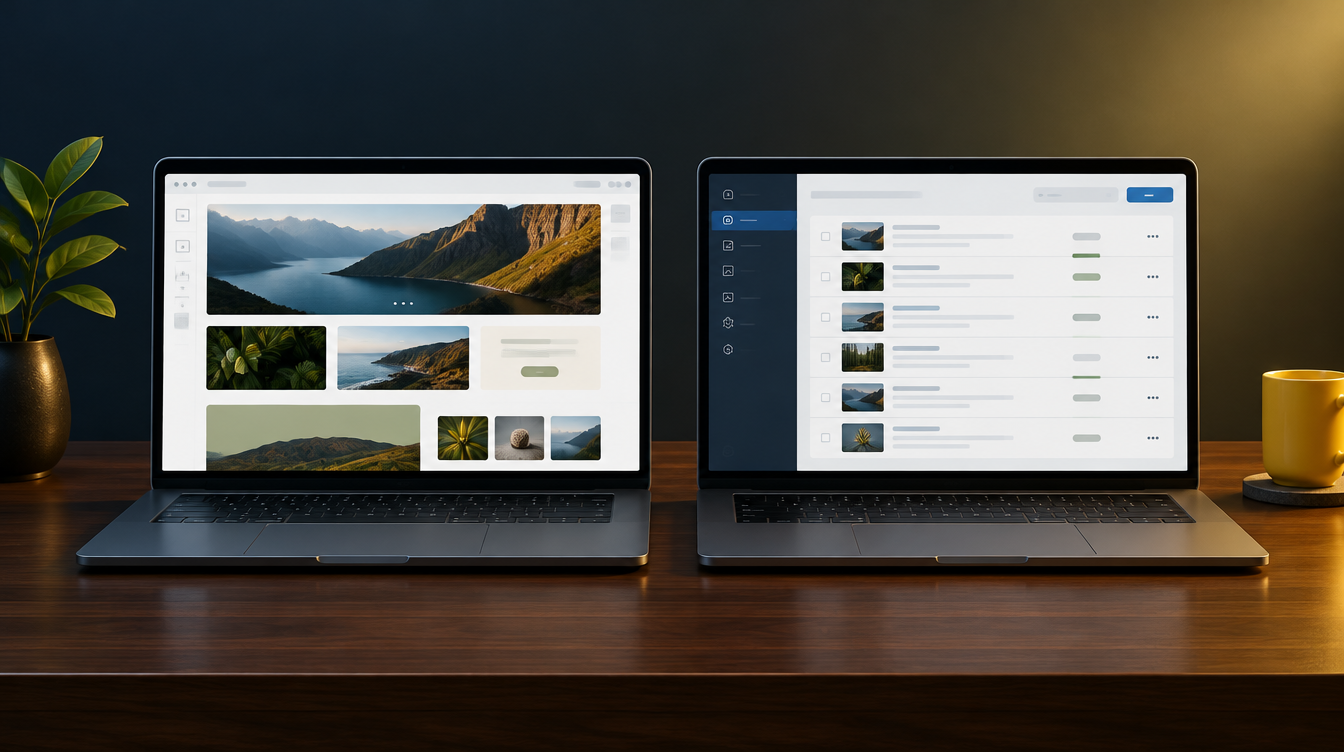
Short answer: Framer is usually the better choice for marketing websites where design, speed and easy editing matter most. WordPress is still the better choice for sites that need complex functionality, large online stores or membership features.
Whitetower builds on both. We have been building WordPress sites for years and now design and develop Framer websites as well. So this isn’t a sales pitch for one platform. It’s how we help clients choose.
Framer vs WordPress at a glance
| Framer | WordPress | |
|---|---|---|
| What it is | Visual website builder with design, CMS and hosting in one | Open-source content management system you host yourself |
| Hosting | Included | Separate, you choose the host |
| Editing | Visual, edit on the page | Block editor or page builder, depending on setup |
| Design control | Very high, built for designers | High, but depends on the theme and builder |
| Extending the site | Plugins and code components, smaller ecosystem | Tens of thousands of plugins |
| Ecommerce | Not built as a full store platform | Strong, through WooCommerce |
| Maintenance | Platform updates handled by Framer | Core, theme and plugin updates are your job |
| Ownership | Hosted on Framer | Full control of code and hosting |
| Best for | Marketing sites, landing pages, startups, brand-led businesses | Complex sites, large stores, memberships, custom features |
Ease of editing
This is Framer’s biggest advantage. Your team edits pages visually, the way they see them. New pages can be built from approved components, and CMS content such as blog posts or case studies is simple to manage.
WordPress editing varies a lot. A well-built block theme is easy to use. An older site built with a heavy page builder can be slow and easy to break. If your marketing team avoids touching the website, that is a sign the setup is working against you.
Design
Framer was built by and for designers. Layouts, animations and responsive behaviour are controlled directly, without code. That makes it a strong fit for brand-led businesses that want their website to look distinctive.
WordPress can match that, but it usually takes more custom development to get there.
SEO
Both platforms can rank well. Neither will rank a poorly planned site.
Framer handles hosting, SSL, sitemaps and responsive output out of the box. You control page titles, meta descriptions, URLs and redirects. Structured data such as JSON-LD schema can be added with custom code.
WordPress offers mature SEO plugins with a lot of control, and it suits very large content sites with complex needs.
What matters more than the platform: content structure, heading hierarchy, page speed, internal links, schema and a clean migration if you are moving from another site.
Speed and performance
Framer sites are hosted on Framer’s own infrastructure and tend to perform well without much tuning.
WordPress speed depends on your host, your theme and how many plugins you run. A lean WordPress site can be very fast. A bloated one can be slow, and fixing it takes ongoing work.
Security and maintenance
With WordPress, you are responsible for updating the core software, your theme and every plugin. Outdated plugins are one of the most common ways WordPress sites get compromised. That means you need a maintenance plan, either in-house or with an agency such as our WordPress maintenance and support team.
With Framer, the platform handles updates and hosting security. Your responsibilities are mostly limited to user access and any third-party code you add.
Cost
The build cost for a custom site is often similar on both platforms. It depends far more on the number of pages, the design work and the integrations than on the platform.
Running costs are where they differ:
- WordPress: hosting, premium plugin licences, security tools and a maintenance retainer to keep everything updated.
- Framer: a monthly or annual site plan from Framer, which includes hosting. Check Framer’s pricing page for current plans.
For many marketing sites, Framer works out simpler to budget for. For complex sites with lots of functionality, WordPress often remains better value.
Ownership and flexibility
WordPress is open source. You own the code and can move to any host.
Framer sites live on Framer. You can’t easily take the site to another host. For most marketing sites that trade-off is fine. For businesses that need full control of their infrastructure, it can be a deal-breaker.
When to choose Framer
- Your website is mainly for marketing and lead generation.
- Your team wants to update pages without a developer.
- Design and brand presentation are a priority.
- You want less ongoing maintenance.
- You are launching a new brand, product or campaign quickly.
When to stay with WordPress
- You run a large WooCommerce store.
- You need memberships, learning management or complex user accounts.
- You rely on specific plugins with no Framer equivalent.
- You need full control of hosting and code for compliance reasons.
Thinking about moving from WordPress to Framer?
A migration done badly can wipe out years of search rankings. Done properly, it shouldn’t. The essentials:
- Audit every page and decide what to keep, merge or retire.
- Keep your best-performing URLs the same where you can.
- Set up 301 redirects for every URL that changes.
- Rebuild forms and integrations, such as your CRM and analytics.
- Test everything before switching the domain.
- Monitor Google Search Console for errors in the weeks after launch.
If you’re weighing up who should do the work, read our guide to hiring a Framer developer in Sydney.
Frequently asked questions
Is Framer good for SEO?
Yes, when it is set up properly. Framer gives you control over titles, descriptions, URLs and redirects, and you can add structured data. Rankings still depend on content and technical setup.
Is Framer cheaper than WordPress?
Build costs are often similar. Framer usually has simpler running costs because hosting is included and there are no plugins to maintain. Complex sites can be better value on WordPress.
Can I move my WordPress site to Framer?
Yes. Pages are rebuilt in Framer, content moves into the Framer CMS and redirects protect your rankings.
Can Framer run a blog?
Yes. The Framer CMS handles blogs, case studies, team profiles and other repeating content.
Can Framer run an online store?
Framer isn’t built as a full ecommerce platform. Businesses with serious online sales usually stay on Shopify or WooCommerce.
Need help choosing?
Whitetower is a Sydney digital agency that builds on both Framer and WordPress. We will tell you which one suits your business, and why. Learn more about our Framer design and development and WordPress website development services, or get in touch.
